Chinese Stroke Order: Why It Matters and How to Learn It
Why do Chinese characters have a stroke order? See how five common rules work in characters like 三, 你, and 国, then try them in your own handwriting practice.
When learning Chinese characters, memorizing their meanings and pronunciations is only part of the process. You also need to learn how to write them.
One thing beginners often find confusing is stroke order (笔顺, bǐ shùn) — the conventional sequence in which the strokes of a Chinese character are written. But why does the order matter, and do you really need to follow it every time?
What Is Chinese Stroke Order?
Chinese characters are made up of individual strokes, such as horizontal lines (横), vertical lines (竖), and dots (点). Stroke order refers to the conventional sequence used to put these strokes together.
For example, 木 (mù, tree) consists of four strokes. Rather than drawing the entire character at once, you write each stroke in a particular order to build its final shape.
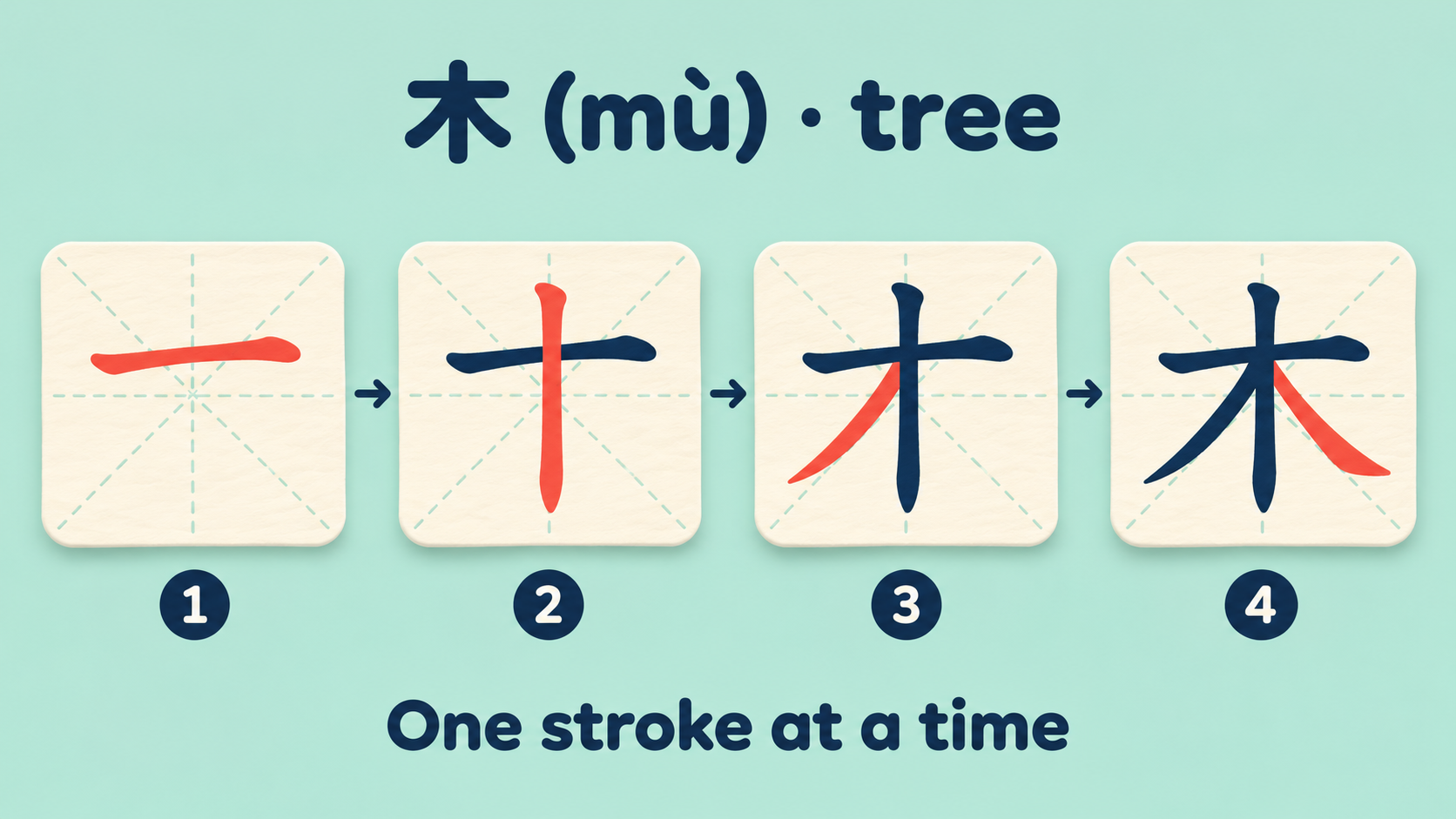
These conventions help make handwriting more consistent and natural.
Why Does Stroke Order Matter?
Writing a character in the wrong order usually won't prevent someone from understanding it. Still, learning the standard sequence has several practical benefits.
1. It makes writing smoother
Following a standard sequence helps your hand move naturally from one stroke to the next. This becomes especially useful when writing complex characters or writing quickly.
2. It helps you understand character structure
Chinese characters are not random collections of lines. Many are made up of recognizable components that fit together in specific ways. Learning how they are written helps you notice how these components are constructed and positioned.
3. It gives you another way to remember characters
Writing a character stroke by stroke adds a physical process to visual recognition. Practicing the movements can reinforce your memory and make it easier to reproduce a character without looking at a model.
5 Basic Chinese Stroke Order Rules
Most characters follow a set of commonly used principles. These five rules are a useful starting point:
1. Top to bottom (先上后下)
Write upper strokes before lower ones. Example: 三 (sān, three) — write the three horizontal strokes from top to bottom.
2. Left to right (先左后右)
When a character has components on both sides, write the left component first. Example: 你 (nǐ, you) — write 亻 before 尔.
3. Horizontal before vertical (先横后竖)
When a horizontal stroke crosses a vertical one, the horizontal stroke generally comes first. Example: 十 (shí, ten) — write the horizontal stroke before the vertical one.
4. Outside before inside (先外后内)
For enclosed characters, write the outer component before the inner component. When there is a closing stroke, it is generally written last. Example: 国 (guó, country) — write the outer enclosure, then the inner component, and close the bottom.
5. Left-falling before right-falling (先撇后捺)
When a character contains both a left-falling stroke (撇) and a right-falling stroke (捺), the left-falling stroke generally comes first. Example: 人 (rén, person).
These five rules cover common patterns. Some characters combine several of them, while others have stroke sequences that these rules don’t cover. When you’re unsure how to write a character, you can look it up in Hanzi Writer's stroke order demo to see each stroke in sequence.
How to Practice Writing Chinese Characters
Knowing the rules is one thing; putting them into practice is another. Try writing characters yourself instead of relying entirely on recognizing them on screen.
A few practical tips:
- Start with simple, frequently used characters before moving on to more complex ones.
- Pay attention to the order and direction of each stroke, not just the finished shape.
- Practice characters you have recently learned so handwriting becomes part of your regular study routine.
Practice Handwriting with ChineseSkill
In ChineseSkill’s Mandarin lessons, you can practice writing the characters you’re learning. The handwriting exercise shows you the stroke order, lets you trace each stroke on screen, and gives you feedback if you write a stroke out of order. After tracing a character a few times, try writing it on paper from memory to see whether you can recall the sequence.
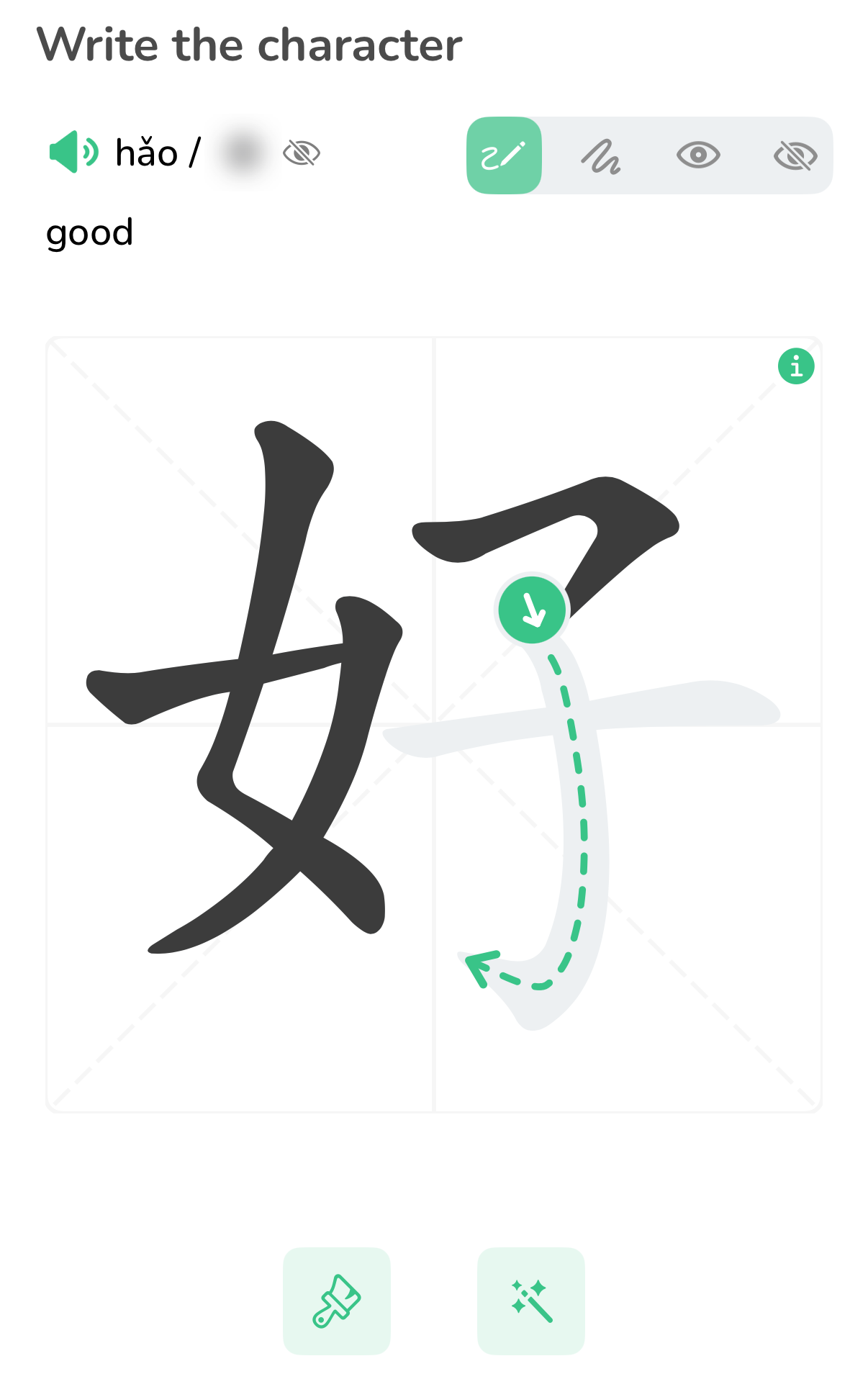
As you practice, focus on how the individual strokes come together to form each character. You don't need to master every character at once. Start with the basics, practice regularly, and gradually build your confidence.
Happy writing!